Sunday, February 16, 2014

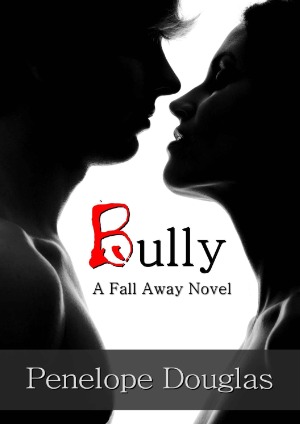
Bully

by Penelope Douglas

so nice to see the topic of bullying being turned into a romance! that is definitely the way to deal with bullies. they just need hugs and kisses and your virginity. poor misunderstood bullies. Jared the manly wittle bully with daddy issues just needs to be wuved by someone. bullies just pick on you because they are secretly in love with you. why even bring up the idea that bullying often causes kids to kill themselves. that's not romantic, yuck!

in the words of one of the most embarrassing reviewers on Goodreads:

18090508"This may make me seem a little crazy- but I will just say it right now. I LOVE JARED. Okay, a lot of people loved Jared by the end of the book. Not me. I loved him the entire time I read this book. He was a jerk. An asshole. A bully. But there was just something about him that pulled me to him... I was rooting for him the whole book, so yay!"

self-esteem much?

gosh the author sure knows the right topic to choose to make some money. not a cynical choice at all! and I see that this is apparently the first book in a series. I wonder what the second book will be called. how about "Date Raper"? the wuveable misunderstood wapist just wants to wuv you!! as long as he's a hunk, who cares?

 photo judgingyou_zps7792c868.gif

Friday, February 14, 2014

The Magician King

by Lev Grossman

The Continuing Adventures of a Smug Magical Asshole, as written by An Asshole. and now featuring The New Adventures of a Completely Self-Absorbed Bitch.

i suppose i understand the acclaim that has been heaped on Grossman. he is playing with tropes as his characters play with magic. he has a puckish sensibility that makes reading his series a tart and spiky experience. his tone is breezily casual and entirely unsentimental. and since Snark is the New Law of the New Millenium, the snark that is delivered in spades throughout his novels probably lets many readers off the hook of reading genre fiction... everything is delivered neatly wrapped up within a knowing, eye-rolling, jaded wrapping paper. this gift can be unwrapped at sophisticated dinner parties and the reader won't have to suffer any kind of embarrassment over reading and talking about "Fantasy".

10819920
but i had to do a lot of eye-rolling of my own. it's not as if The Magician King is just about a shallow little prick who views everything - and i mean Everything - around him with disdain. i probably would have less of an issue with this book if it were simply about an unsympathetic protagonist. but nope, the author himself makes it clear that he is officially on the side of cynical, snarky assholery. it is all in the writing itself, and not just in the voice of our tedious hero. i can start with the ending, where banality has been substituted for actual meaning and resonance. but the problem is endemic to the entire narrative. people and places are described in the same shallow, smirky, insulting manner, as if the book was actually written by our tedious hero. a bit of the jokiness scores; most of it just falls flat, with a thud. like the irritating, oh-so-clever commentary of some overly-intellectual prick at a party, going on and on about how pedestrian tv is, how terrible music is these days, how pop culture is for idiots, how he's been there, done that, and there were so many tourists and it was all so predictable and banal and now he's rolling his eyes and arching his eyebrows and i just want to smack the bullshit right out of him. in short, this novel lacks SINCERITY.

10079321okay, enough of the complaints. there is still a lot to enjoy. first off, new co-protagonist The Completely Self-Absorbed Bitch is actually pretty interesting and her parallel flashback adventures are often enthralling. the way that the parallel narratives of our heroine's past and our hero's present eventually dovetail into one narrative is clever and quite elegantly structured. an island battle is genuinely thrilling. the novel's major set-piece, where a bunch of brilliant but mentally ill magicians conjure up an actual god is pretty awesome - and very upsetting. the story of young Benedict is also quite well-done... there is genuine tragedy and sadness there, in a way that really stands out from the rest of the narrative. and extra points for portraying rape without even the slightest bit of offensive sexiness.

i was happy to see my favorite characters from the prior novel, Penny and that novel's superb villain Martin Chatwin, both return in a couple excellent cameos. and many of the ideas are wonderful - in particular the Neitherlands, dragons, Venice, the return of the old gods, magical halfway houses, a magical ship, magicians who have somehow transitioned into higher beings, the seven golden keys, a sloth, the Customs Agent and especially her daughter... and i'm probably missing a few equally choice nuggets. The Magician King is deeply flawed and its juvenile tone may be instantly dismissable; it is also practically brimming over with a host of smart, fun, and intriguing moments. much like a creative, outsider-type teenager - full of unearned cynicism and irritating snarkiness, but also full of vibrant energy, a host of ideas, and a fresh, sometimes even brilliant way of looking at things.

so, when all is said and done, i'd actually recommend this book as an interesting and often enjoyable experience. but i'd have to give a big disclaimer before recommending it - a disclaimer delivered with a little snark and a lot of eye-rolling.

Tuesday, February 4, 2014

The King of Elfland's Daughter

by Lord Dunsany

14686a tale out of time: an old myth reinvented; a new myth born. a wayward bride, a forlorn husband, their son - a pitiless hunter. a defiant old woman; a melancholy old man. trolls delight in delight; unicorns are for slaughter. question: what is Time in Elfland? answer: a fantasy! twelve men want magic. madmen shall take captive a king. borders shall be crossed and boundaries may be as fleeting as dreams. be wary of what you wish for! love shall conquer all and death shall be no more.

prose like poetry, like music. the novel: a silvery lake stretching to shores unknown. i gazed at this lake by day and its surface shone with sunlight: the world and all its colors flamed bright and fierce. i took a lonely boat ride by night and its surface glistened with moonlight, reflecting the beyond... i stared into those starry depths and saw the infinite: an entrancing sight!

Photobucket

Tuesday, January 28, 2014

Ombria in Shadow

by Patricia A. McKillip

781124this is a beautiful, dreamy fantasy. it is about a fallen city, the mysterious city under that city, two magical beings, a royal bastard, a cast-out mistress, a kind of changeling, a curious scholar, a lonely child prince. it is about ruthless control and equally ruthless revolution against that control. although it does not have faerie, it is a fairy tale, one that is both modern and classic in tone and structure. the writing is splendid; McKillip's words are like gems that she strings together to make a sparkling kind of wonderful. she does not overwrite her story; her prose is lusciously rich, almost edible - but it is also streamlined, stripped-down, full of ambiguity and meaning yet never spelling things out too explicitly, never getting lost in detail. sometimes you have to step back, to appreciate the vivid beauty conveyed on the page, to wonder over the mysteries being so carefully teased out, piece by piece. the setting, the city of Ombria, is a marvel: a sad, gloomy, violent, desperately alive place, one that has fallen far from its glorious history; a sad, gloomy, mysteriously un-alive un-place, a shadow city beneath and between and co-existing with the living spaces of Ombria, an un-living history. Ombria in Shadow is full of magic, tragedy, mystery, and love.

MAGIC: it is front and center. don't expect rules to this magic, although it doesn't feel random. it is simply not spelled out. it is as ambiguous and mythic as the rest of the tale. its two sorceresses - one a fell and fungal villain of the darkest hues and the other an unsettling force of nature, change, and potential catastrophe - are marvelous creations.

TRAGEDY: there are the central tragedies, of course, the greater ones that dominate the narrative. but McKillip does an excellent job in making the tragedy hurt beyond those larger strokes, beyond the death of a king, beyond the attempted murders, beyond the ruination of a city. she makes the tragedy felt in many small ways... casual violence in the night, the distance between father and daughter, lovers parted and lost, the feeling of disempowerment, the loneliness of a little boy.

MYSTERY: answers are almost always tantalizingly out of reach, parsed out little by little, nothing ever simply dumped on the reader. the ending gives you answers, but they are not straightforward, they require contemplation and a willingness to forsake easy answers and easy satisfaction. when they come, the answers were almost as mysterious as the mysteries themselves. that said, when the riddles of the nature of the two sorceresses were finally answered, separately... marvelous to read, perfect.

LOVE: my gosh i was delighted about the Love that is at the heart of this tale. specifically, the love between children and those people in their lives who love them and care for them - be they parents or friends or guardians. of course i have nothing against Romantic Love and its place in any story. but how refreshing to have that focus changed! there are Love Stories in Ombria, naturally. but this book has at its heart Familial Love - with "family" being one that is both born and chosen.
this is the kind of book that you just want to hold close to your heart, be sentimental over, and think about again... but perhaps not talk about, at least not too much. it is a delicate book, like most precious things.

Friday, January 24, 2014

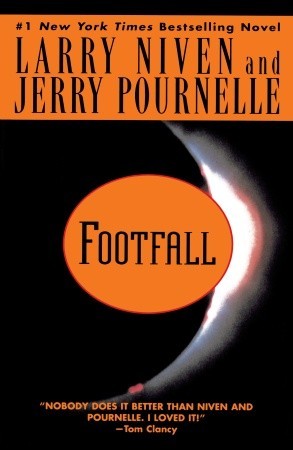
Footfall

by Larry Niven

 photo footfall_zpsd0fae0e5.jpg

Footfall is an Independence Day (the movie) type book, about an alien invasion and a wide range of humans across the globe reacting to said invasion. I'm sure you've seen Independence Day and I hope you didn't like it because it sucked. but have you seen Mars Attacks? now that is a great alien invasion film. smart and hilarious. Footfall is much better than Independence Day but it is a far cry from Mars Attacks.

the first thing you should know about Footfall is that the aliens in question who are invading, sometimes slaughtering, and in general causing mass havoc across the earth look like baby elephants. that is fucking ingenious!

the second thing you should know about Footfall is that it features a bizarre and hilariously bad and hilariously awesome scene where some rural homespun types, a big city politician, some Soviet astronauts, and the baby elephant alien invaders screen and then discuss that classic film Deep Throat. what Deep Throat means about sex, about relations between the genders, about morality, and of course about whether anyone really gives blow jobs. then the whole thing degenerates into a hysterical argument about 'just us folks' types vs. 'big city feller' types and then the American way vs. the communist way. finally the baby elephants get frustrated and tell the humans that when they are in control, the humans will be able to live by their own rules - but the rules better be consistent and the humans better actually follow them. I literally could not believe what I was reading! that scene is a timeless classic.

116356
I started off the review by comparing the book to a crappy mass-produced Hollywood special effects extravaganza because the issues of those kinds of products certainly plague Footfall. maybe because it was written by two authors, there is a certain blandness and an annoying repetitiousness to its writing. the prose, if you can call it that, is smooth and polished and utterly workmanlike. it indulges in all of the stereotypical character types of your typical lame Hollywood action movie. most of the ladies need to be rescued. most of the guys are strong and upright and dependable. there are annoying jerks who get what they deserve (especially that reporter, ha!) and there are wacky eccentrics who turn out to be heroic, of course. the Russians are often described as having 'crafty peasant' looks, which I did not know was a thing. everyone is white, white, white. after a while, I grew really weary of the humans and if this novel was all about that species, overall this would have been a tedious disappointment.

but then there are the baby elephants! Niven and Pournelle really outdid themselves on these aliens. fascinating, well-developed, by turns threatening and sympathetic, just beautifully rendered and utterly alien creations. a far cry from aliens who are basically humans in alien drag. these baby elephants turned Footfall into an often delightful and fascinating experience. and they are given vaguely Thai or Khmer names, which added a lot of color (cough) to their characterizations and which made it an odd experience to read while traveling around Cambodia. my companion was really disappointed that I was reading an alien invasion novel to fall asleep to after a whole day exploring Angkor ruins, but hey I'm a prosaic kind of guy.

I've had this book since I was a kid and I'm not sure why I took so long to read it. it is an 80s style book, so it has one of those 80s fold-out covers:

 photo michael20whelan_sf_larry20niven_jerry20pournelle_footfall_zps0ddcc6e5.jpg

that cover mesmerized me. but I think it also disturbed young mark monday because there was something so sympathetic about that alien. and so I avoided the book until now. here's a close-up of that image:

 photo michael20whelan_sf__zps794a923c.jpg

those humans look quite threatening. the alien looks intriguing, like someone I'd like to sit down and have some coffee with. plus check out his little backpack! and that mirror to spy on threatening humans. and that teddy bear! adorable. I hope he didn't take that off of a slaughtered human because that would be rather a bummer. let's just assume he found it somewhere and decided to keep it. aww!


Tuesday, January 7, 2014

TOP TEN READS OF 2013


10. THE WAYWARD BUS by John Steinbeck
 
I didn’t like this book. I didn’t like its deterministic perspective on humanity or its pessimistic outlook on the way people interact and love and hate and live. It doesn’t matter that I didn’t like it. The Wayward Bus is gorgeous. It details heartbreak in miniature, lives that cross each other briefly, sadness and pettiness and barely understood anger…  the striving to be more, understand more, live more, no matter the hopelessness of that striving. I didn’t like this book, but you don’t need to like a thing to love that thing.

9.  MARTYRS AND MONSTERS by Robert Dunbar

My favorite book of horror read in 2013 was this masterful collection of short stories. Martyrs, monsters, and the danger and potential toxicity of self-enclosure. Dunbar is a thoughtful author who specializes in menacing ambiguity, but in this book he also illustrates the flexibility and fluidity of his talents. By turns eerie, funny, scabrous, and inexplicable, each story is its own strange and vividly imagined world.
 
8. THE TOWERS OF TREBIZOND by Rose Macauley
Macauley’s 1956 novel takes its reader on an amusing and whimsical trip through Turkey. She’s like an aunt who is full of all sorts of stories but whose breathless storytelling style is its own reason for listening. Aunt Rose serves you some nice herbal tea and tells you this wry story; at the end of her tale, she picks up that teapot and smashes you across the head with it. Her story is not meant to be amusing. Wake up!
 
7. RED CLAW by Philip Palmer
Dense and action-packed, Red Claw is a rollicking saga and a demented, bloody massacre. This bizarre future society is ingeniously imagined; the alien anthropology on display is even more impressive. Palmer is an aggressive and brazen author who wants his rollercoaster to be as appalling as it is fun. Plus genuine bravery and an uplifting ending! Sorta. My favorite science fiction novel of 2013.
 
6. LONDON FIELDS by Martin Amis
Amis continues his lifelong thesis on the insect nature of mankind in this lavish and spiteful death-farce. Humans Off Earth Now!
 
5. THE AIRTIGHT GARAGE by Moebius
Moebius is surely one of the most likeable geniuses to ever write and draw a comic. His visions are as loveable as they are obscure. Worlds within worlds; super-powered humans who never bother to show those powers; characters who jump off the page and then disappear forever. Circular narratives! Mind-bending visuals! Demented plotlines! Nonsensical dialogue! This charming epic is candy for the brain.
 
4. THE PYX by John Buell
How is this 1974 crime novel not a classic? Each sentence, each paragraph is a work of art. Follow the haunting heroine as she walks inexorably down her tragic path. Sit back and try to figure out the mystery with the stalwart and humane detective as he sorts out this shadowy tragedy. Gape, agog, at a truly fearful ending.
 
 3. MEMOIRS OF HADRIAN by Marguerite Yourcenar
"But books lie, even those that are most sincere…” but not this one. Yourcenar finds her way to the heart of a man, his own truth, by reimagining not just an ancient world, but all aspects of the man who lives in that world. By the end of this book, I felt as if I looked through Hadrian’s eyes and thought Hadrian’s thoughts. The man is the world is the book. O Death, sometimes you come not with a sting, but with an embrace.
 
2. QUEEN LUCIA by E.F. Benson
My favorite reread was Benson’s classic first novel in his Mapp & Lucia cycle. Rose Macauley is your eccentric spinster aunt with a heart of steel; E.F. Benson is your quirky queer uncle with a mouth full of ironic innuendo and ludicrous, hysterical tall tales. Except these tall tales don’t involve giants or beanstalks; instead they detail a fantastically petty and obsessive little English village full of smaller-than-life characters who do larger-than-life things. Pure pleasure from beginning to end.
 
1. THE GRAVEYARD BOOK by Neil Gaiman
Gaiman wrote something wondrous, something perfect. Again.
 

Friday, January 3, 2014

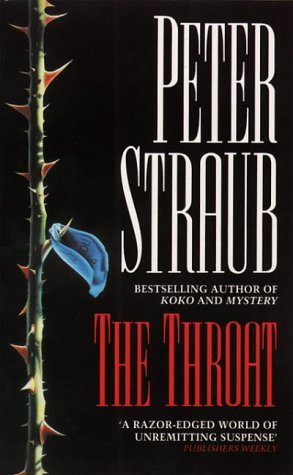
The Throat

by Peter Straub
13323783
The Throat is an often brilliant thriller that is concerned with big questions about identity, the past and our memory of it, the demons that shape us and the demons we carry with us. It is intricately structured, densely layered, full of eerie and haunting dreams and flashbacks, and is impressively thoughtful in its take on murder and vengeance. As a third book in a trilogy, it also must extend and wrap up storylines started in the preceding novels Koko and Mystery – and for the most part it delivers. But sadly, the novel is a deeply flawed one. There are many minor irritations that I could look past, but I can’t ignore the flaw at its heart: its terrible mismanagement of a certain key character. The person at the heart of the novel seems to be the character that Straub lost all interest in fairly early on – which leaves the novel with a hollow core rather than one that should have been full of mystery and meaning.

Synopsis: Tim Underhill from Koko and Tom Pasmore from Mystery come together to solve a series of killings by a resurfaced – or new? – Blue Rose Killer. The Blue Rose killings and their legacy lived in the corners and shadows of prior novels and so I was full of anticipation in seeing them given their due.

It is a strange experience to read a book, admire the technical skill of its writing, and spend hours upon hours living in its world (The Throat is nearly 700 pages long)... and end up feeling utterly disappointed. And yet I don’t feel like I wasted my time. Straub is a masterful writer. This novel reconfirmed to me that he is the yin to Stephen King’s yang, the coolly intellectual brain to King’s bloodily beating heart. King has kinetic characters who jump off the page just as his narratives can spin messily out of control. Straub has dispassionate, contemplative ciphers as characters who live in stories that, despite being both lengthy and dreamily ambiguous, are still narratives that are carefully mapped out. I don’t think one writer is better than the other; they are both masters. I enjoy Straub's intelligence, his concentration, even his quasi-Jungian flourishes. Although it was ultimately a disappointment, it was a fascinating experience and I don’t regret the many hours spent within its pages.

"Then the nightly miracle took place once again, and I fell down into the throat of my novel.”

SPOILERS FOLLOW. ALSO, a lot of bitching. So if you loved this book, you may just want to skip the rest.

Okay, the minor irritations. First: there is a very sloppy bit of meta-nonsense in the beginning where Peter Straub is a character in the novel; this is done to resolve the problem of Mystery’s island setting - which is incompatible with the story started with Koko and ending with The Throat. That sloppiness casts a shadow on the characters of Underhill and Pasmore, who now confusingly seem to have the same childhoods. Or not, who knows – Straub doesn’t clear things up. Second: the setting of Millhaven is schizophrenically portrayed: at times a small town where everyone knows everyone and you can easily walk from one end to the other in the space of a couple hours, at other times a highly dangerous city of industry (365 murders a year! For real?) modeled on Chicago or Milwaukee or Detroit. Third: by the middle of the book I easily figured out the identities of all three killers: Old Killer, New Killer, Surprise Killer. It was obvious to me and I am no Tom Pasmore: the Bad Man, the Good Man, and the Catalyst (for the story itself) are all too-clearly telegraphed as the killers on numerous occasions. Fourth: Lt. Bachelor is compelling but is also a second-rate Colonel Kurtz, living in his Vietnam era heart of darkness. Fifth: the use of race riots as a backdrop in a novel that itself doesn’t engage with race or racial tensions felt disrespectful and cheap.

I could actually have looked past all of those things and still given this novel a somewhat qualified thumbs up. But the laziness in dealing with central character John Ransom just drove me up the wall. This is a character who is the catalyst for the entire novel. He is given an intriguing introduction that sets him up to be fascinatingly multidimensional; his flashback appearances in Vietnam are likewise interesting. But that is not the character we spend the most time with – instead we get a John Ransom who is a petty, whiny, greedy dipshit who exists to bitch, moan, roll his eyes, and make a series of foolish mistakes. He becomes a tedious drag to the story whenever he appears. John Ransom needed to be an ambiguous creation, evasive and mysterious yet real enough to come alive on the page – practically every other page, because he’s that much of a lynchpin to The Throat’s narrative. He needed to be resonant; instead he is flat, flat, flat. Fie, Straub, fie! The heart of darkness is not a petulant douchebag.