Showing posts with label futuristik. Show all posts

Monday, March 2, 2015

The Faded Sun Trilogy: Kesrith, Shon'jir, Kutath

by C.J. Cherryh

57042grim, dry, melancholy, frustrating, riveting, endearing, and tragic are all good words to describe this moving anti-epic. well it looks like there are two more words to add to this list, moving and anti-epic. now how about another: bromantic.

grim: this trilogy is about a human and two members of an alien race known as the Mri, their long flight back to their homeworld and what they find there. this is not an "adventure". it is a stark, dark tale about how easily betrayal can be rationalized and, more importantly, how hard it can be to survive that betrayal if your version of survival equals never giving an inch to your betrayers - or your allies.

dry: this trilogy is austere and introspective, and Cherryh evinces little humor and lightness in the telling. yet the dryness works perfectly and never comes across as pretentious. she approaches her subjects in a careful, detached manner and that style is a perfect fit for her story.

melancholy: one character gives up everything. two characters lose everything. they do not spend much time in reflection on the things they lost, but that loss pervades the atmosphere and their characterization from beginning to end.

frustrating: it is not the novels that frustrate, it is the characters within. the Mri are a frustratingly pure race. they do not negotiate. they do not take prisoners. they view all non-Mri as un-people; the definition of "Mri" is "the People" while all others are "tsi-Mri", or "not the People". they do not bend, they do not yield. they are a hard people and the fact that so many others are set against them makes their single-mindedness even more frustrating. why in the world would a human want to become one of them? Cherryh makes that decision understandable and the harsh Mri strangely noble, without turning them into that infernal cliché, the "noble savage".

riveting: there is much that quickens the pulse. an attempt at genocide. dangerous journeys through wastelands. political intrigue. challenges and duels and games with throwing blades. how tough it is to travel in the dark of space. spaceships bringing fire and destruction upon abandoned cities. men learning to find true connection despite an automatic inequality between them. a woman becoming a strong and fearless leader.

endearing: the dusei are empathic bear-like sidekicks to the Mri. they are scary and adorable and a fully conceived alien species. Cherryh really outdid herself in creating these fascinating, wonderful creatures. she made me dream about them.

tragic: there are two horrific slaughters in this trilogy and they cast a long shadow on all subsequent actions in the narrative. the entire journey is suffused with such a deep sadness; the tragedies made this trilogy genuinely depressing but not in a way that made me want to stop reading - in a way that made me consider all such slaughters. I admired Cherryh's ability to make these tragedies so terrible and yet so resonant. these tragedies are what happen to people like the Mri, in science fiction and in our own real world.

moving: and yet ultimately this is not a depressing work. there is much that saddens and despair is woven throughout the story. but this isn't about the end of a people; this is about how a people can perhaps survive, on their own terms. and it is a story with flawed, real characters who will stay with me.

anti-epic: do not expect sturm und drang. despite everything I listed under riveting and tragic, the music this trilogy plays is all in minor notes. things are not made to be larger-than-life; instead they are precisely the size of individual lives, no matter how great the stakes. it is not operatic, it is intimate.

bromantic: at the heart of this saga is the story of a friendship between two men, a human and an alien. watching this relationship evolve into something real and lasting was amazing. the (platonic) love that grows between them is the foundation of the entire trilogy; it is the best part of these excellent novels.

324313527081981598933

Monday, February 2, 2015

Lilith's Brood

by Octavia Butler
contains the novels Dawn, Adulthood Rites, and Imago


1246820


from the Earth Journal of Scientific Analyst SLJLK92349UO, Earth Invasion Exploratory Unit


one thing became clear to me as I read this trilogy: Octavia Butler is not partial to the human kind. oh, humanity: violent, vengeful, and vicious; petty, pitiful, perpetually proud. avaricious and all too willing to prey on their own. as a fellow visitor to this planet, I can only view Butler's perspective as one that is in line with my own. and so this was quite an invigorating experience given the overabundance of naively pro-human novels in the science fiction genre.


the story, in broad strokes: humanity destroys itself... the starfaring race of the Oankali arrive to pick up the pieces by saving what few humans remain on their blighted planet. these saviors of humanity offer them a sort of bargain: join with us - literally - and be reborn. it is not actually a bargain because humanity does not have much say in the matter. predictably, humans seethe and rebel against this kindly offer. my cynical self can't help but think that the main reason humans resist the compassion of the Oankali is because a large number of tentacles are involved. oh, racist humans! the trilogy follows the lives of three individuals: the woman who paves the way for a joining of the two species, and two of her children - two different kinds of human/Oankali "constructs".


Butler correctly assesses humanity's tragic flaw: a genetic tendency towards hierarchism at every level. a flaw that on the micro level leads to an inability to form relationships based on equality - and in the macro, one that could easily lead to the end of humanity's home world as they know it. oh, humanity. Butler writes in simple, straightforward prose, in what I imagine to be a chilly, neutral monotone. her style of writing makes the reading experience a deceptively simple one. but this is not a simple work. there is so much to contemplate throughout this series, in particular the idea of essentialism in terms of basic human nature: in gender roles, in the propagation of the species, in the ability to form families and other necessary social units, in the ways that humans think and act and react. science fiction as a genre once had at its core the idea of "speculation" - what would happen if this concept was introduced, what would happen if that idea changed a world. Butler's trilogy is a part of that excellent tradition and these books are challenging in the best sort of way: they force the reader to speculate on their own limited natures, on their own individual decisions and on the future of their kind. Lilith's Brood imagines where humanity's ultimate path may lie if they continue to give free reign to their basest genetic impulses - and then she imagines another path.


it should go without saying that Butler is ultimately in favor of the Oankali way. as a race, they are not without their own rather endearing flaws. but compared to humanity? well, that's like comparing a human child's scribblings to the works of the relatively advanced human Da Vinci. it was quite refreshing for me to read an alien invasion saga that is so resolutely on the side of the sensible "aliens". it was also fascinating to witness Butler's iciness gradually melt away, slowly revealing herself to be a rather tender individual who fully endorses the spirit and acts of cooperation and connection and joining that are necessary for any species' ongoing survival. her calm, dry-eyed observational skills are merely the outer shell of a person who values above all else such things as curiosity, compassion, and the concept that to live is to change. all beings are works in progress.


I have observed humanity as well; indeed, that is my entire mission on this planet. I hesitate to say that I am more sympathetic to the species, but my robot heart does have a certain fondness for this stumbling, bumbling race - a sympathy that a being from Butler's own insect species would most likely find quite foreign. well, I have been programmed for both sympathy and empathy while such emotions are often eschewed by her culture. I suppose such differences in perspective will be reconciled once our joint invasion of Earth commences.


60929 116249 60934

Monday, June 2, 2014

Memory

by Lois McMaster Bujold

1141958
a colleague asked me a series of questions while we were out drinking the other night, questions like So what's next for you? and Is this all you are planning on doing with your career? and Is your current job how you want to be defined and does that actually give you satisfaction? I found myself annoyed then defensive then offended. what gave her the right to question me, I've accomplished a lot in my job and in my life, yes I am content with my career and why the hell shouldn't I be, blah blah blah. in the end I realized that I shouldn't have been offended because I think she was asking me those questions because she was asking herself the same. and so I calmed down and we continued to get drunk while philosophizing on the choices we've made and the nature of our existence blah blah blah.

I think some people like to live in boxes. I am such a person. I love my box, it's a safe and comfortable one and I've spent a lifetime constructing it. my box is one that gives me genuine satisfaction and the feeling that I am doing only what I want to be doing with my life. but I think other people resent and reject the idea of a box; they prefer to live in what can be called a "liminal space" - that space between, that place of ambiguity and movement and looking towards what comes next. you can look at your goals in life and try to come up with a plan or timeline to achieve those goals. or you can look at your goals and see them as constantly in flux, in movement depending on where you are, liminal. or you can look at yourself and realize that you are actually not a goal-oriented person. I think all of those are different kinds of boxes. I think my colleague may disagree.


61880so this book, Memory, is about those sorts of things. despite opening with a character getting his legs shot off and ending with a high-stakes trap for a devious villain, this is far from an action novel. it is a thoughtful story about who we are, why we are, the boxes we construct, the identities we create for ourselves and the separate boxes those identities live in, how our identity/identities can become dominos or houses of cards falling if something or someone takes those boxes away. Miles Vorkosigan's dual identities of mercenary fleet commander and aristocratic peer of the realm have always been bubbling in the background throughout his stories; in this novel they finally come to a head. Bujold does a superb and moving job in delineating who Miles is, and was, and can be; she gives the mundane, all-too-common situations of making errors & trying to cover up your tracks, losing a job & so losing a part of your identity, a palpably emotional resonance. she does all of that and then she doubles down and gives us another ongoing character, Simon Illyan, going through a similar thing but in an entirely different manner. Miles is the sort of character who assertively rejects the idea of a box and who insists he lives in a liminal space - but who has actually been constructing two boxes to live in, and has actively not been living in the space between, in that liminal space. Simon is the sort of character who has constructed his own perfect box - one that makes his career equal his actual self - only to find that box dismantled and his sureness of purpose and self destroyed as he moves into a purely liminal space. it is fascinating comparing the two journeys.

in sum, this is a wonderful novel about figuring out that who you are does not equal your job or your birth name or any specific, singular role or title; rather, it is the sum of all such things, and your experiences, and your internal workings, your actions and your potential, your ability to change or not change, and so much else. you = not easily summed up in one word.

I love that this space opera is all about these 'mysteries' that every human experiences. I know when I pick up a Vorkosigan Saga novel that I will be enjoying some action and some intrigue and some political maneuvering and maybe even some romance. standard space opera pleasures. but I also know that I will be enjoying a human tale about actual human beings and the things that happen in life, to everyone. it is that last sentence, that particular quality, that makes this series so special.


Friday, January 24, 2014

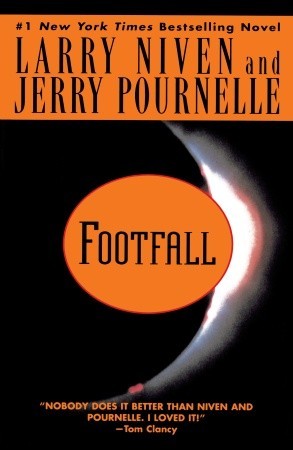
Footfall

by Larry Niven

 photo footfall_zpsd0fae0e5.jpg

Footfall is an Independence Day (the movie) type book, about an alien invasion and a wide range of humans across the globe reacting to said invasion. I'm sure you've seen Independence Day and I hope you didn't like it because it sucked. but have you seen Mars Attacks? now that is a great alien invasion film. smart and hilarious. Footfall is much better than Independence Day but it is a far cry from Mars Attacks.

the first thing you should know about Footfall is that the aliens in question who are invading, sometimes slaughtering, and in general causing mass havoc across the earth look like baby elephants. that is fucking ingenious!

the second thing you should know about Footfall is that it features a bizarre and hilariously bad and hilariously awesome scene where some rural homespun types, a big city politician, some Soviet astronauts, and the baby elephant alien invaders screen and then discuss that classic film Deep Throat. what Deep Throat means about sex, about relations between the genders, about morality, and of course about whether anyone really gives blow jobs. then the whole thing degenerates into a hysterical argument about 'just us folks' types vs. 'big city feller' types and then the American way vs. the communist way. finally the baby elephants get frustrated and tell the humans that when they are in control, the humans will be able to live by their own rules - but the rules better be consistent and the humans better actually follow them. I literally could not believe what I was reading! that scene is a timeless classic.

116356
I started off the review by comparing the book to a crappy mass-produced Hollywood special effects extravaganza because the issues of those kinds of products certainly plague Footfall. maybe because it was written by two authors, there is a certain blandness and an annoying repetitiousness to its writing. the prose, if you can call it that, is smooth and polished and utterly workmanlike. it indulges in all of the stereotypical character types of your typical lame Hollywood action movie. most of the ladies need to be rescued. most of the guys are strong and upright and dependable. there are annoying jerks who get what they deserve (especially that reporter, ha!) and there are wacky eccentrics who turn out to be heroic, of course. the Russians are often described as having 'crafty peasant' looks, which I did not know was a thing. everyone is white, white, white. after a while, I grew really weary of the humans and if this novel was all about that species, overall this would have been a tedious disappointment.

but then there are the baby elephants! Niven and Pournelle really outdid themselves on these aliens. fascinating, well-developed, by turns threatening and sympathetic, just beautifully rendered and utterly alien creations. a far cry from aliens who are basically humans in alien drag. these baby elephants turned Footfall into an often delightful and fascinating experience. and they are given vaguely Thai or Khmer names, which added a lot of color (cough) to their characterizations and which made it an odd experience to read while traveling around Cambodia. my companion was really disappointed that I was reading an alien invasion novel to fall asleep to after a whole day exploring Angkor ruins, but hey I'm a prosaic kind of guy.

I've had this book since I was a kid and I'm not sure why I took so long to read it. it is an 80s style book, so it has one of those 80s fold-out covers:

 photo michael20whelan_sf_larry20niven_jerry20pournelle_footfall_zps0ddcc6e5.jpg

that cover mesmerized me. but I think it also disturbed young mark monday because there was something so sympathetic about that alien. and so I avoided the book until now. here's a close-up of that image:

 photo michael20whelan_sf__zps794a923c.jpg

those humans look quite threatening. the alien looks intriguing, like someone I'd like to sit down and have some coffee with. plus check out his little backpack! and that mirror to spy on threatening humans. and that teddy bear! adorable. I hope he didn't take that off of a slaughtered human because that would be rather a bummer. let's just assume he found it somewhere and decided to keep it. aww!


Sunday, December 1, 2013

Hull Zero Three

by Greg Bear

7975415

Mystery in Space!

Poor Teacher. He wakes up cold and naked and without a memory, his only companion a mean little girl, on board a gigantic spaceship called “Ship”… whatever should he do? Why, he should move forward of course, forward, ever forward! Otherwise gigantic monsters out of some monster’s imagination will collect and/or devour him. He needs to figure out who he is, what his purpose may be, and what the heck is happening with Ship, or he’ll die. And so begins his brief and rather frenetic adventure. Or rather, his “adventure” – because this is less of an adventure and more like a nightmare that he cannot escape.

Greg Bear is one of the most respected ‘hard science’ writers of science fiction currently working. He’s probably some sort of genius scientist in his spare time, like Alastair Reynolds. But I didn’t really get a sense of hard science being central to the story. Nor, unlike other reviewers, did I feel this was an exploration of a Big Dumb Object. All the pleasures of both things are there, certainly. Fascinating science that makes my head spin and a BDO that is awesome in scope and also functions as a terrible haunted house in space, full of deadly traps and creatures just waiting to kill off poor Teacher. Again and again. Sorry, that last sentence was spoilerish – but in an ambiguous way that makes you want to read this book, right?

Despite the hard science and the BDO, I think the author is mainly interested in exploring things like Identity and Memory. The novel and its protagonist continually contemplate what makes us who we are – whether it is how we act in the here & now or whether it is about what we have done in our lives, our context, our relationship to ourselves, and how those things impact how we move forward. Ever forward! Teacher is a tabula rasa, which can prove frustrating at times and amusing at other times – particularly when he realizes he has just said or thought a word that is new to him. But I think that Teacher, whether frustrating or amusing, is mainly a blank slate so that the reader can contemplate what is needed to fill in those blanks.

The novel is fun but it is also surprisingly cerebral. It has action and wonder and mystery and it has some endearing characters and it has plenty of fearsome beasts, all of that fun stuff. But this is more of a novel of contemplation than one of adventure. The protagonist is ever moving forward, trying to survive… but I spent most of my time musing on all the moving parts that make up a human, that create the human condition itself. I think that that is exactly what Bear intended when writing Hull Zero Three.

Wednesday, October 9, 2013

Foreigner

by C.J. Cherryh

1598845well-respected and prolific science fiction author-cum-scifi-anthropologist C.J. Cherryh puts her considerable gifts to work in this introductory volume to her elephantine mega-series, as she begins a sensitive new tradition: fiction that is specifically geared to those unfortunate individuals who have no experience in reading, as well as to our fellows experiencing severe mental challenges. i for one appreciate the effort and am happy to report that the writing in this novel makes every attempt to be as repetitious, plodding, and as glacially-paced as possible, in order to allow the novice and/or challenged reader to fully grasp the ideas on display. to that end, each and every thought and concept and character bit is repeated extensively, often repeatedly within the same page, and upwards of a dozen times over the course of, say, two or three pages. surely this bold strategy will only serve to support those first-time readers in their endeavors, and can only help those challenged by low memory capacity and extremely short-term attention spans. the reader can literally forget or skip entire passages, and lo and behold, exactly the same commentary will reappear, again and again. bravo, Cherryh! this is certainly a step in a brave new direction. it is no wonder that this novel spawned so many sequels!

I have constructed a brief fantasia that illustrates this arresting technique:

Bren was extremely worried about the assassination attempt and was quite annoyed that his freedom of movement had been compromised. A worrisome Bren couldn't believe he had to suffer an escort everywhere! "I really am awfully worried that I can't phone home", said Bren, as he huffily realized that his ability to buy canned meat alone was no longer possible. "This really bothers me, I can't even leave my apartment without an escort!" notes Bren, as he paces his apartment in frustration. It was driving him crazy with annoyance and worry that not only had an assassin tried to kill him, now he couldn't travel alone anymore. He could not leave his apartment alone. After all, an assassin had just attempted to murder him. An actual assassin! Trying to murder him! It was all so worrisome. And as if the assassination attempt wasn't enough, now he couldn't even leave his apartment unaccompanied. "This is really very annoying and I feel awfully compromised, so much so that I am genuinely worried," reflected Bren.

okay, this novel gets some respect from me for two opening chapters (or "books", as Cherryh sees fit to call them) that are very well-written and genuinely riveting. and that have nothing to do with the tedious narrative that follows.


Sunday, September 29, 2013

Omnilingual

by H. Beam Piper

6512805

Oh The Golden Age of Science Fiction!

Oh - the first humans on Mars will be... archaeologists! working with the military but genuinely respecting each other! and the archaeologists' needs actually come first! oh! such a wonderful Golden Age!

Oh - a novella all about language and discovery! writing that is clean and straightforward! no battles no twist endings no nefarious villains no nonsense! not that I have anything against nonsense!

Oh! Gender Equality in the future! no Golden Age chauvinism! none of that nonsense!

Oh they really smoke a lot in the future!

Oh, in case you are wondering, I Liked It! I may not reread this one but it is lovely and perfect! a classic!

Oh! you can read it for free! thank you, awesome Project Gutenberg!

Photobucket


Tuesday, September 3, 2013

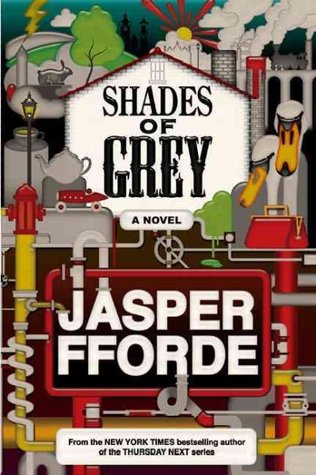
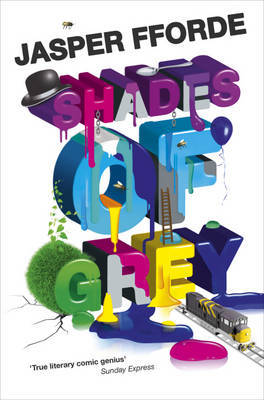
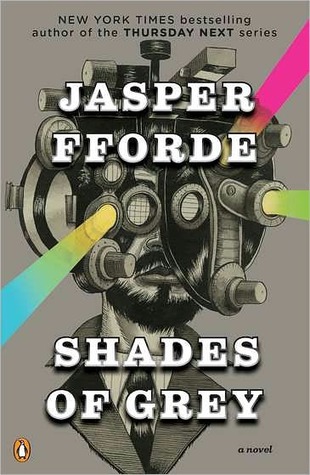
Shades of Grey

by Jasper Fforde

2113260the world of Shades of Grey is a nightmarish dystopia: a ruthless totalitarian regime that destroys all individualistic spirit, all creativity and ambiguity and questioning of authority; a monstrous government that divides its citizens into color-stratified class/caste systems that is based upon the inherent physical deficiencies of its populace; a place with no love and where death is the end result for the underdog and misfit.

7739723sounds pretty bleak, right? well, dear reader, think again! this rather amazing novel is as light and airy as a souffle, a real pleasure to consume from beginning to end. i was smiling constantly and laughing out loud nearly as often. the tone is brisk and drily amusing. the plot and the various details of our young hero's travails are wonderfully absurd: the punishment for his past cheekiness is to conduct a "Chair Census"; he must beware deadly carnivorous swans and "mega-fauna"; his greatest ambition is to be the head of a String Factory! upstairs from him and his dad lives the "Apocryphal Man" - an historian the state has deemed 'does not exist', and so is free to wander around naked, stealing food, muttering terrifying truths yet remaining unmolested. the love of his life is mean Jane - a Grey, the lowest caste - a rebel with a cause who does not hesitate to punish him drastically whenever he gets in her way.

2246937the writing itself is splendid. Fforde is a deadpan and satirical author with a perfect grasp of what to show, what to tell, what to keep hidden, and what to save for an exciting climax. i was reminded of several things when reading this book: the equally absurd and distinctly provincial post-apocalyptic settings of Dick's Dr. Bloodmoney and Miller's A Canticle for Leibowitz, and especially the delightful skewerings of english village life within the Mapp & Lucia series of E.F. Benson. much like the latter, the humor within Shades of Grey is derived almost entirely from the Comedy of Manners.

8725325a Post-Apocalyptic Comedy of Manners set within a Provincial Dystopic Colortocracy! how's that for original?

best of all, for me at least, this wonderful novel does not have a genuinely cynical bone in its body. yes, it skewers hypocrisy and stupidity in the most cutting way. yes, it is about a vicious, cruel future. but it also believes in investing its hero and heroine with the power to change themselves, to fall in love, to try to bravely risk changing the world around them. and it portrays all of the good and all of the bad with the lightest, most charming of touches.

i am really looking forward to the sequel!

Saturday, August 24, 2013

Star of Danger

by Marion Zimmer Bradley

1203635an entry in the Darkover cycle. pleasantly enjoyable overall, but also slim and rather forgettable. this one concerns Larry Montray, Terran, and his teen adventures on the wintry, semi-barbaric world of Darkover. those adventures come complete with assorted monsters & aliens, bullying street urchins & dastardly kidnapping bandits, psychic powers, a forest fire, an amusingly antagonistic bromance between our hero & an arrogant Darkovan lordling, and much contemplation & conversating regarding the nature of being a man & what constitutes honor in a fight (i prefer the Darkover belief system that loathes guns & bombs as the weak man's choice). this early novel in the long-running series has none of the mid-saga's books' fervent, near-hysterical emotional content nor their sometimes moving, other times soap operatic deconstruction of gender & sexual orientation. it is a pleasingly straightforward, clearly written, earnest young adult novel filled with boyish enthusiasm, teenage angst, and on-the-cusp-of-maturity musings on Adulthood. probably a good starting point for kids interested in Darkover. but are there any even out there?

Wednesday, August 7, 2013

Dr. Bloodmoney

by Philip K. Dick

636108Dick places his absurdist situations, bleak scenarios, and quirky characters within an almost pastoral post-apocalyptic san francisco-bay area. the setting is primarily a small town in marin, with everyday people slowly trying to rebuild themselves and their world. the writing is typically loose and off-kilter. results are sublime. and very strange, per usual. two oddly endearing yet threatening characters stood out for me amongst the compellingly diverse cast: Hoppy Harrington - cringing, deluded, armless & legless, gifted with increasingly terrifying powers and a very specific plan to take over the world; his nemesis Bill - whiny, yearning, able to speak to the dead, an unborn twin to a self-absorbed 7-year old girl, longing for a release into the larger world. watching these two face off against each other was worth the price of admission - their escalating conflicts are wonderfully amusing and often genuinely thrilling. and yet they are but two pieces in an intriguingly mystifying and often ironic larger puzzle.

this is a book of many minor, human notes; mournful and hopeful in equal measures. a true pleasure to read.

Tuesday, June 25, 2013

Childhood's End

by Arthur C. Clarke

you think you're so fucken smart, don't you mark? ha, think again. all your little plans and goals, your little community of friends and family and colleagues, your whole little life... what does it matter in the long run? not a whole fucken lot. grow up, sad child.

Childhood's EndChildhood's Endtake this book for example. a classic of the genre, written by a classic author. you thought you knew what you were getting into; you've read countless examples of the type. you sure are a well-read little scifi nerd, aren't you? for the first half, maybe longer, you were right. a well-crafted central character, flavorful supporting characters, intriguing aliens, a spicy mystery to solve. it was all laid out as expected and the pleasures were of a familiar sort. when the mystery of the aliens' appearance was solved, you were a wee bit surprised. but it was a comfortable sort of surprise. it's not like it blew your little mind. it was clever. but overall everything up until then was as you expected. well fucking Congratulations, chump, your predictions came half-true. you want a medal? you don't get one. there aren't any half-medals.

there are some fucking spoilers that follow!

Childhood's EndChildhood's Endyou weren't expecting what came after. those revelations came out of the blue for you, didn't they? you didn't expect to be made to feel so small, to get a little depressed, to have your expectations pounded all to pieces. it was kinda beautiful in a way, kinda mind-blowing. but mainly it was fucken sad. oh you poor baby. you have your own private little dreams of widespread empathy and the future of children and the future of humanity and our future place in the world and - at the most secret, sentimental heart of you - some corny spiritual post-life higher consciousness transcending type shit. you didn't expect that to be a part of the novel, did you? you didn't expect it to all come out, be laid out on the page like a body in a morgue, your body, and then just get eviscerated. your dreams of some sort of future beyond this present, where you are still you, a wistful dream that you like to think is both delicate and profound like one of those origami things you like to do. what's your favorite one? a pinwheel. well you get to watch that pinwheel of a dream get smashed and turned inside out and torn up into bits. revealed as a typically naive and childish fantasy. ha! so much for that. grow the fuck up, chump.

Tuesday, June 11, 2013

Rendezvous with Rama

by Arthur C. Clarke

Rendezvous with Rama (Rama, #1)i like world-building in science fiction and fantasy. in these modern times, extensive world-building is commonly derided... it is often seen as a lazy way to create a world, telling not showing, an author so in love with something they've built that they just want to describe instead of allowing the reader to slowly experience. i understand that point of view; world-building can often be seen as a glorified, masturbatory info-dump. but for some reason, it just doesn't bother me too much. i think this is because with good world-building, i feel like i am looking at a kind of work of art created by the author - a rather nerdy work of art, sure - but still something that a person has put a lot of thought, energy, and passion into. i really respond to all those details that the author is in love with sharing. but maybe i just have a high threshold for these kinds of things, as i'm also the kind of person who likes to hear all the details in a person's dreams.

Rendezvous takes world-building to a different sort of place: Clarke is artifact-building. the amazing alien spaceship Rama is indeed amazing; almost the entire novel is devoted to exploring this gigantic vessel. most of the narrative is in service to purely descriptive passages of Rama; everything else is either minimal characterization or political discussions from various scientists & ambassador types about how to respond to Rama. all of this very focused world-building has the potential for much boredom and irritation. but i never felt that; the author's love for his creation is too clear, his details are too meticulous, his sense of wonder and his ability to concretely illustrate the almost-unknowable are too skilled, too palpable. despite my feeling that this novel essentially functions as a prologue to the 'real' action to come, i got caught up in Clarke's passion and enjoyed it all.

Rendezvous with Rama (Rama, #1)for such a man of science and large-scale concepts, Clarke is a surprisingly warm writer. his characters are pleasant - and real. there are no grand villains, at least not in this initial volume of the series. and he has a sense of humor - particularly around sex (one character is described as having no interest in anything outside of work, except for sports and sex - preferably combined; a high-level scholar is described as originally making his reputation through researching "puberty rites in late-twentieth-century Beverly Hills"). for all of the high-falutin' ideas on display, there is zero pretension present in Rendezvous.

although the novel ends before anything actually happens, there does seem to be interesting directions that the series could go. the slight mining of sexuality and gender roles could lead somewhere. and politics - particularly around how government responds to the unknown - are clearly an intriguing next step. i'm looking forward to seeing how this series pans out.

all that said, as far as Giant Mysterious Alien Artifacts go, right now my favorite is still Greg Bear's Eon - which in many ways appears to be an homage to Rama.

Wednesday, June 5, 2013

Malignos

by Richard Calder

far, far in the future, Richard Pike is a disreputable pimp in the Pilipinas Archipelago, a former war hero and expat from the Darkling Island, whoring out the love of his life - the demonic "malignos" Gala, a devout catholic born in the deep underworld, and a turncoat on her people during the great war between the Earth Above and the Netherworld. trouble comes our lovers' way, and the brave Gala is poisoned and simplified. Pike must journey to the heart of the Netherworld, to the mind-bending city of Pandemonium, to find her cure. a dark and surreal science fantasy quest ensues.

Malignosdo you have a secret inner hipster, a snobby elitist who loves your little finds - ones that no one else seems to know about? i sure do. i get a thrill from liking things that few people will ever come across. but it's a sad feeling too. why haven't i heard about Richard Calder before now? why isn't his excellent Malignos better known? it seems unfair.

this is a pretty amazing novel. its dense & hallucinogenic imagery, casual sadism, and intense focus on perverse & not-so-perverse spirituality reminded me of the early, bizarre trilogies of Elizabeth Hand and Paul Park. even better, his use of arch & deeply ironic dialogue, his shallow & self-absorbed hero, and the oddly cheerful & light tone for some dark events were reminiscent of Jack Vance's equally picaresque and arty Dying Earth series. in this story of a tormented, murderous hero and his larger-than-life sword, there is also more than a nod to Moorcock's Elric series - it seems almost like a straight-up homage. and, obviously, the basic narrative of this novel - a hero's descent into an underworld to save the life of his lady love - is also the basis of innumerable tales and legends.

the writing is wonderful. the imagery is gorgeous. the narrative is compelling. the characters are off-kilter but strangely iconic. the author, himself an English expat living in Philippines, brings to the  table both insouciant verve and a lived-in understanding of elements of Filipino culture. this is science fantasy that made me pause and consider many things.

it is perhaps inappropriate to actually call this a "science fantasy". the history of this world is given careful pseudo-science explanation. SPOILERS IN THE REST OF THIS PARAGRAPH: first of all, the universe is composed of many dimensions. sometimes these dimensions bleed over and sometimes denizens of one dimension will cross over to another. in a certain dimension that is clearly where the idea of Hell sprung from and bled over, evil is good. people apparently have given themselves the appearance of what we call devils, amongst many such outre appearances. the philosopher-scientists who dominate this dimension, and the dark-energy beings that protect them (including that eternally famous villain, the cold-hearted Metatron) became ambitious and sought the create their own personal universe. disaster occurs; their dimension is destroyed; their spirits crossed over to a new dimension to possess and integrate with its more perverse and artistic residents. these newly transformed beings began to create great & terrible machines and to fashion new, more appealingly demonic forms. they were called many things: goblins, ogres, malignos. they are not necessarily evil... they just see things a different way. and driven underground, they plot to someday return. oh, and i'm not even talking about our dimension. Malignos takes place in a post-post-post-apocalyptic future of a familiar-seeming earth, but one that includes such world powers as Atlantis and Cathay. it's all so mindboggling and carefully thought-out... awesome!

there are many absorbing scenes, bizarre & beautifully described tableau, and moments of stylized dialogue & offhand musings to enjoy, to chuckle over, to slowly digest their implications, to read again, maybe to treasure. one of my favorite bits:

"If she embraces old superstition, Defoe, it is because the new superstitions that have currency in our world, superstitions that inhibit and finally destroy our sense of empathy, will lead us all to destruction.' Gala frowned. She did not seem to like the equation of her faith to superstition. Neither, perhaps, did I. But I was too damaged by war to be able to lift my face to heaven and put all my hope in the love everlasting. The only thing I feared more than the mummery of my own existence was the possibility that God also was an ostentatious fake."


Monday, May 6, 2013

Silently and Very Fast

by Catherynne Valente
Silently and Very Fast
hello gorgeous! i am amazed. such a tender story of an AI trying to grow up, such luminous prose, glowing pearls of prose, layers of myth and fable and parable and dreams and dreaming and dreamscapes and science like magic. a tale retold in so many ways, characters like archetypes but real, so real! a child trying to grow up. parents who are brothers and sisters and lovers and children. such yearning! such emotion! such simple emotions, and such complexity. such brilliant clarity. an author perfectly in control of her talent. a weaving, a tapestry, an ancient story and a bright shiny new one. how many ways can a story be told and still feel fresh? Valente seems to know all the ways. and all the words, and all the metaphors, and all the things my own robot mind wishes it could say, to put into words, to make sense of things like life and death and growing up and wanting to be more, so much more, but not knowing what that more really is, can be, could have been, can still be. a tender and wistful dream of a story. it won the Hugo for Best Novella. well-deserved. a good recipe will taste rich and evocative of certain places, but will also be simple. it will focus on showcasing the ingredients. it will all come together in a beautiful kind of simplicity. i like to take my time with such a meal, but it's hard. so delicious! it looks so good and it is good for you too. Silently and Very Fast is an enriching and nourishing experience. warmth and kindness and sadness and a terrible wonderful ambiguity; the sweet breath of life and a darker taste of the unknown. all the important things. beautiful, beautiful! the story makes me want to have AI children of my own. i sigh, a longing sigh but i'm not sure what i'm longing for. see what you do to me? i can barely make my words make sense. i can't even get my sentences right, my metaphors straight. oh it doesn't matter, you are in me now.

Photobucket

plus you can read it for free here.

Sunday, March 31, 2013

A Princess of Mars

by Edgar Rice Burroughs

A Princess of Mars (Barsoom, #1)

A SYNOPSIS OF THE BOOK A PRINCESS OF MARS!

John Carter travels to Barsoom to live, love, and fight amongst the Green Men, the Red Men, and the White Apes! his Earthman physique combined with Barsoomian gravity means he's incredibly strong and can jump like a giant-sized super-grasshopper!

John Carter arrives there nekkid! everyone is nekkid! they only wear weapons and ornaments! the Red Race knows what Earthers look like and they think all the clothing we wear is apalling and disgusting! i agree!

John Carter is transported to Barsoom from Frontier America directly after a bloody conflict with the dread and savage Red Man (in this case, the Apache)... and on Barsoom, his adventures involve the alternately warlike and peaceful Red Men, who he views as the closest thing to human. coincidence?

Green Men do not believe in love or friendship or marriage or parenthood. they only laugh when another creature is in its death-agonies. they are a war-like people, to say the least. they also share everything. apparently their customs came from an ancient society based in communalism... dare i say, communism? coincidence?

The Princes of Mars in question is a two-dimensional creation: in love with John Carter except for those predictable moments when predictable misunderstandings occur, a Red Princess of the city-state Helium, beautiful, haughty, brave, a woman of her word, etc, etc. her name is Dejah Thoris.

Burroughs writes clean prose that is easy going down and surprisingly modern in its smooth, no-frills style. this is the opposite of a laborious read. the narrative is perfectly straightforward and the infodumps were relatively pain-free. the characters are enjoyably cartoonish. i read this on my droid over the course of maybe a half-dozen bus rides. a charming experience.

the novel features a cute Barsoomian dog-thing - my favorite character!

Photobucket

A SYNOPSIS OF THE MOVIE JOHN CARTER!

John Carter travels to Mars to live, love, and fight amongst the Green Men and the Red Men! his Earthman physique combined with Martian gravity means he's incredibly strong and can jump like a giant-sized super-grasshopper!

John Carter arrives there fully clothed! and then he changes into something more revealing! The Red Race also prefer revealing attire!

John Carter spends an inordinately long and tiresome period of time in Frontier America that is nonsensical and bored me to near-sleep. this inordinately lengthy sequence features conflicts with some Native American tribe, some jail time, and some character bits for a completely non-essential supporting character. on Mars, he comes across the "Red Men", who actually are not red at all but look like they spend too much time at some cheap tanning salon. they should be called the Orangey Men.

Green Men are monstrous humanoids. their children are adorable little widgets.

there is a Princess of Mars and she is perhaps the most three-dimensional character in the film: a scientist and a kick ass warrior. she is played by Lynn Collins, who was strangled by a serial killer in the first season of True Blood.

the film is co-written by Michael Chabon! what! the film is directed by Pixar house director Andrew Stanton. i watched a sneak peek of this at Pixar itself, after indulging in a few free drinks at one of the Pixar bars. i got drunk!

the film features a cute Martian dog-thing - my favorite character!

Saturday, March 30, 2013

The Martian Chronicles

by Ray Bradbury

The Martian Chronicles

RIDDLE ME A MARTIAN RIDDLE

۞

A Riddle: What walks on two legs, uses two arms, talks like a human, acts like a human, kills humans, replaces humans, wants to be accepted and loved by a human?

Answer: A Martian!

۞

A Riddle: What walks on two legs, uses two arms, talks like a human, acts like an animal except that's unfair to animals, kills others of its kind, wages war on its own kind, and destroys its own planet?

Answer: A Human!

۞

A Riddle: What is built like a succession of linked stories, feels at times like a play by Brecht, feels at times like a mournful and elegiac ode to the dying of small towns, is a wise tale of human nature, is written with melancholy and sighs, is quietly sinister, is gently tragic, yet is also a science fiction novel?

Answer: The Martian Chronicles!

۞

A Riddle: What is a ball of blue fire, a transcended entity, a being that lives in God's grace, a model of wisdom and goodness, and a terrifying symbol of the unknowable? What is meek and shall inherit their earth - but has lost the inclination?

Answer: A Martian!

۞

A Riddle: What should have stayed on its own planet? What does not belong on Mars? What persists in persisting? What flees from home? What destroys that home? What flees back to that destruction? What eradicates much of what it comes into contact? What is a hopeless fool? What has a little - just a little - hope for it yet?

Answer: A Human!

۞

A Riddle: What is science fiction as parable? What creates a series of haunting and haunted tableaux onto which we can project our own desires and fears? What transcends genre trappings? What is a landscape of forgotten plans and failed goals? What is like a waking dream? What is a journey that begins in death and ends with a small, fragile chance that all is not lost? What is like tears painted on a page? What is witty and sardonic and tender and angry and, finally, full of its own strange and painfully human soulfulness?

Answer: The Martian Chronicles!

Thursday, March 28, 2013

Stand on Zanzibar

by John Brunner

Stand on Zanzibar

:: Stand on Zanzibar is one of my favorite novels ::

Stand on Zanzibar (50th Anniversary Collection)

a) Stand on Zanzibar is about overpopulation. if the entire world's population were to stand on Zanzibar, it would sink.

b) Stand on Zanzibar is about information. how is it processed? what does it really mean?

c) Stand on Zanzibar is about the evils and cupidity of corporatization. it is about how a corporation may be able to do a good thing, despite itself.

d) Stand on Zanzibar is about the evils and stupidity of the State. it provides many examples.

Tous à Zanzibar

SCANALYZE: "brown-nose" is a casually derogatory term for blacks.

CAST INCLUDES: Norman House is a muslim african-american and a ruthlessly ambitious rising star in General Technics. in the early part of the novel, he acts quickly and sprays an amok terrorist's hand with liquid helium, causing it to freeze and then break off. later in the novel, he is given de facto control of the african country of Beninia, which is being taken over by his company.

:: this book made me angry at times ::

LOCATIONS INCLUDE: Beninia has somehow remained a neutral refuge throughout its history. it has resisted slavers, colonial forces, mass waves of immigrants, and many other external influences. its people are malnourished, poorly housed, and only marginally educated. there has not been a murder in Benina in over 15 years. its residents do not have a phrase to explicitly describe "losing your temper". instead they use a phrase that means "went temporarily insane". once, several years ago, in a different village, a boy saw a man "lose his temper" while arguing with his wife. everyone laughed at the man's outlandish behavior. so silly and so strange!

~ i lose my temper. it is one of my flaws. i say terrible things sometimes. ~

Morgenwelt

PROFILE OF NOVEL: Stand on Zanzibar was written by John Brunner in 1968. it is a New Wave science fiction novel about a future dystopia. it won the Hugo Award in 1969. it won my heart and mind in 1990. i just reread it.

PROFILE OF AUTHOR: John Brunner has written over 50 books. this novel was inspired by the cut-up technique of John Dos Passos' U.S.A. Trilogy. i was occasionally reminded of William S. Burroughs and Kathy Acker. and Robert Silverberg. and William Gibson. and the way my own mind processes information.

PROFILE OF NOVEL: according to my best friend wikipedia,

"Stand on Zanzibar was innovative within the science fiction genre for mixing narrative with entire chapters dedicated to providing background information and worldbuilding, to create a sprawling narrative that presents a complex and multi-faceted view of the story's future world. Such information-rich chapters were often constructed from many short paragraphs, sentences, or fragments thereof — pulled from sources such as slogans, snatches of conversation, advertising text, songs, extracts from newspapers and books, and other cultural detritus. The result is reminiscent of the concept of information overload."

Stand on Zanzibar

SCANALYZE: "eptification" is a process in which the government can turn an ordinary man into a trained assassin.

CAST INCLUDES: Donald Hogan is a white american and a synthesist - a rather dilettante-ish position paid for by the government, in which the practitioner studies patterns in the mass flow of information. in the early part of the novel, his unwitting presence in a non-white ghetto inadvertedly causes a riot in which hundreds are hurt and a helicopter pilot is beaten to death. later in the novel, he is turned into a spy and sent to the angry country of Yatakang.

:: at times this book made me irritated and frustrated. ::

LOCATIONS INCLUDE: Yatakang is a military dictatorship along the lines of modern-day Pakistan. it was once a part of the Philippines, which is now called Isola. Yatakang hates the U.S. and is on the verge of U.S.-sponsored revolution. Yatakang is home to a brilliant and humane geneticist. this brilliant geneticist may be able to create super-children.

~ i am half-Filipino. i do not want children, super or otherwise. ~

Всем стоять на Занзибаре

1) due to overpopulation, nearly the entire world has severe restrictions around giving birth. people are obsessed with genetic make-up. if you have flaws in your genetic make-up, you are not allowed to have children.

2) overpopulation + ennui + a lifetime of frustration can equal many things, including the potential for murder & rape & incest. did you know that?

:: this book made me laugh a lot. a great sense of humor. malevolent, merciless, mordant wit. my favorite! ::

[Stand on Zanzibar can be an off-putting experience. many people do not like it. some find it challenging; some find it boring; some find it frustrating. it does not take it easy on the reader. it throws a lot of things the reader's way. the reader is given a mass amount of information to digest. can the reader find patterns in this information? does the reader even care?]

CAST INCLUDES: Shalmaneser is an all-knowing computer created by General Technics. is Shalmaneser growing consciousness?

Todos sobre Zanzíbar

SCANALYZE: "shiggies" are a common type of lady. to be specific, they are attractive, upscale, vaguely whorish young women with no permanent residence. they move or are passed on from guy to guy to guy. guys share shiggies. most young women appear to be shiggies. unless they are daughters, wives, or business leaders.

CAST UPDATE: Norman and Donald are roommates. one is full of cold anger and the other is full of passive idleness. they toke up together. they share shiggies. Norman likes the scandinavian babes and Donald likes the black hotties. the two go to a jail and then to a party together. the two have great and terrible things in store for them. later, they actually become friends. sorta.

@## what is "friendship" anyway? does anyone really know anyone? ##@

CAST INCLUDES: Begi is a Beninian folk figure. he is a trickster of sorts. he exists to punish the greedy, the pretentious, and other assorted pricks and assholes.

(i have too many favorite scenes in this novel to count. my favorite may be the riot. or it may be a party that turns out to be a colossal fail. another favorite may be the scene in which a trained assassin takes down a mucker.)

SCANALYZE: "muckers" run amok. overpopulation and other factors drive them insane. that insanity endows them with the strength of many and causes them to seek the immediate death of everyone around them. they are a sign of the times.

~ sometimes, in crowds, i feel like running amok. but i don't. whew! ~

Stand on Zanzibar

[i have a Goodreads friend who didn't care for this book. he said the plot didn't start for over a 100 pages and all the random snippets of information became wearisome. sometimes i read his reviews and i wonder my God, does he even like reading? still, his opinion is a valuable one to me.]

CAST INCLUDES: GT Buckfast. Eric Ellerman. Chad Mulligan. Poppy Shelton. Guinevere Steel. Sheena & Frank Potter. Arthur Golightly. Stal Lucas. Sasha & Philip Peterson. Victor & Mary Whatmough. Elihu Masters. Gerry Lindt. Dr Sugaiguntung. President Zadkiel Obomi. Jogajong. Olive Almerio. Grace Rowley. Pierre & Jeannine Clodard. Jeff Young. Henry Butcher. Bennie Noakes. all of these characters have POV chapters. by the time the novel ends, ten are dead.

@## do you want to live forever? ##@

(the constant racist language against asians really bothered me. is this because i am half asian? the novel itself is not racist. quite the opposite.)

CAST INCLUDES: Bronwen Ghose does not have a POV chapter. if i have one critique, it is that Bronwen in particular deserved one. a moving character, and a very appealing, very attractive one as well.

PROFILE OF AUTHOR: John Brunner also wrote a book called The Sheep Look Up.
i love that title.

The Sheep Look Up

* Mr. and Mrs. Everywhere go everywhere... just for you! watch them from the comfort of your living room, on your television! they look just like you! *

>SCANALYZER: SCANALYZE!<

Stand on Zanzibar

Stand on Zanzibar should be read carefully, over time. there is too much going on, so you should go slow. i think if you read it too fast It May Become Like A Long Night With Too Much Coke And Too Many People And You Are Almost About To Lose It But You Don't Have Anywhere To Go So You Just Do Another Line And All Of A Sudden It Is Too Much But All You Can Do Is Smile Smile Smile And It Begins To Hurt And Your Brain Begins To Hurt And You Feel Like Freaking Out And Crying.

Stand on Zanzibar should be read quickly like a big rush of information just let it sweep all over you because you know that's what life is anyway just a big rush of random and not-random information so just take it all in like a good little sheep and maybe the information will eventually have some meaning or maybe not.

Stand on Zanzibar has a happy ending.

that is, if you consider a jarringly cynical ending where one protagonist is basically insane after being brainwashed by the government and the other protagonist learns that the only way to stop humans from being ferociously aggressive animals is to tamper with them genetically to be a happy ending.

Stand on Zanzibar is one of the best science fiction novels ever written.

:: i bow before its genius ::